First field season for IceCube Upgrade ongoing at the South Pole
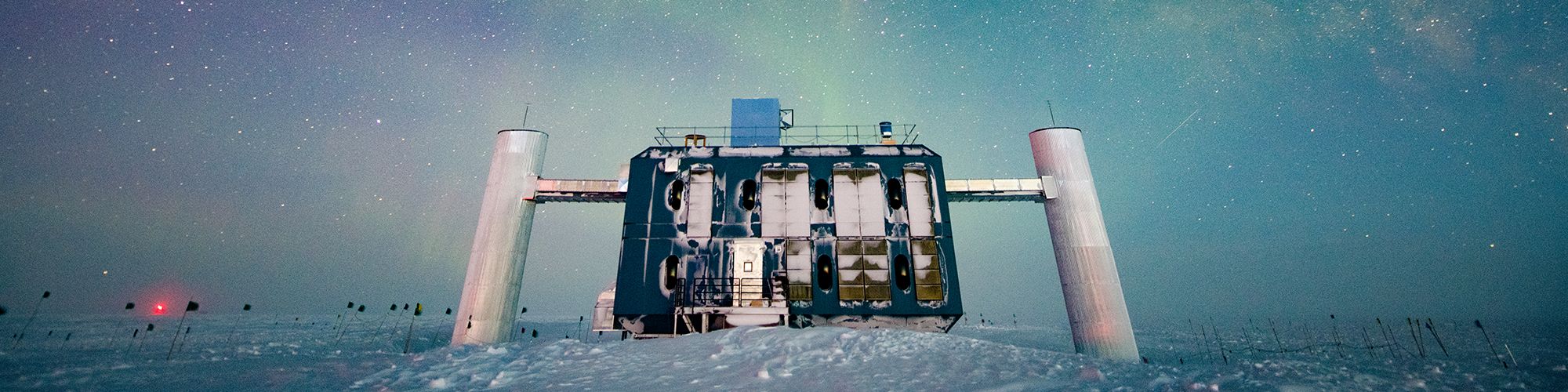
A view of the seasonal equipment site from the first field season for the IceCube Upgrade. Image: Kurt Studt, IceCube/NSF
Header_NGC1068
Neutrinos (blue sky map) in front of an artist’s impression of the Milky Way. Image credit: IceCube Collaboration/Science Communication Lab for CRC 1491
Header_Home10
#IceCube10 – Celebrating 10 Years of IceCube
#IceCube10 – Celebrating 10 Years of IceCube
Header_HomeA
IceCube Explained
What exactly is IceCube? How does it use the South Pole ice to see neutrinos from outer space? Image: Yuya Makino, IceCube/NSF
Header_HomeB
Research Highlights
From neutrino physics to glaciology to dark matter, IceCube science spans a variety of fields.
Header_HomeC
Meet the Collaboration
The IceCube Collaboration includes hundreds of people from around the world. Image: Yuya Makino, IceCube/NSF
Header_HomeD
Activities and Resources
Learn more about IceCube by playing a game, making crafts, or reading our comic!
Header_HomeE
Working at the Pole
IceCube science begins at the South Pole. Image: Yuya Makino, IceCube/NSF
The unification of quantum theory and gravitation remains one of the most outstanding challenges in fundamental physics today. One mystery is the quantum nature of spacetime—a fusion of the three dimensions of space and the fourth dimension of time—and whether it is subject to the randomness seen in other quantum [...]
Over 250 participants took part in the spring IceCube Collaboration meeting, which wrapped up last week in Münster, Germany. Hosted by the University of Münster for the first time, the meeting ran from March 17 through March 22. Before the official start of the collaboration meeting, a number of pre-meetings [...]
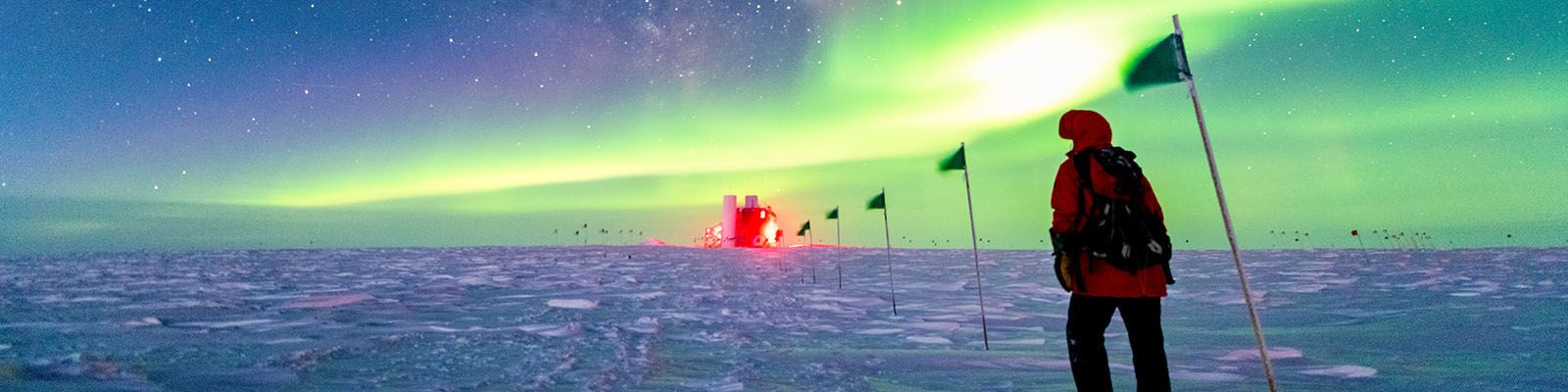
Even though sunset is always a slow and gradual process at the South Pole, it does seem like the “darkness” comes all of a sudden. Last week, those at the Pole were treated to the first large aurora of the season. In the image above, the aurora spreads across the [...]